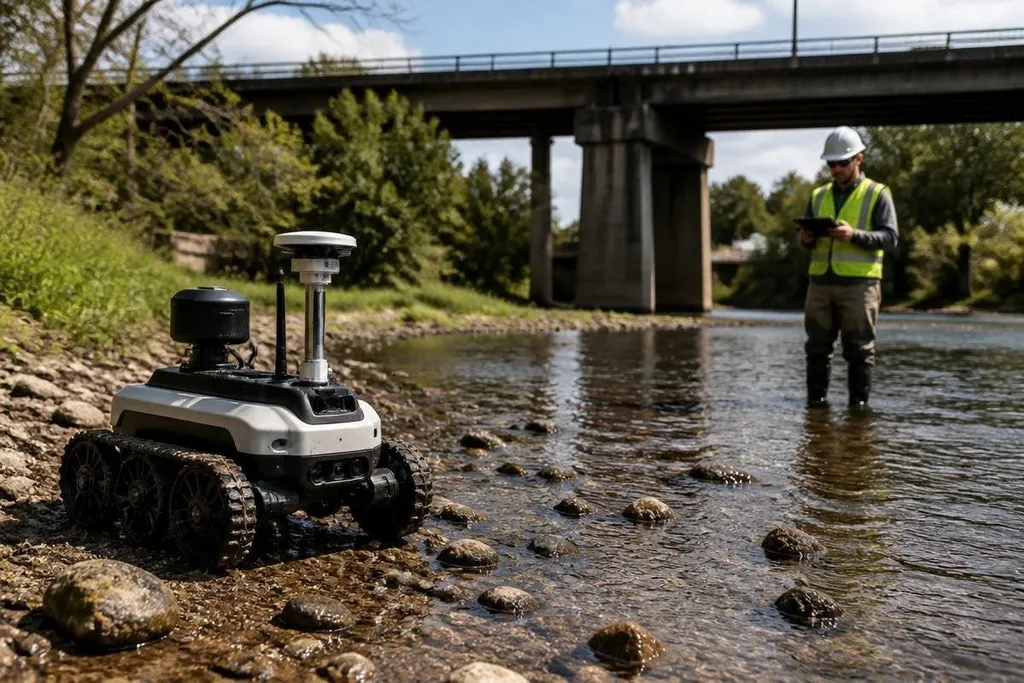
Environmental robots work where people face rough ground, dirty water, thin air, or long hours of repeated checks. AI helps these machines sort sensor data, spot changes, and choose their next move without sending every decision back to a human operator.
- Cameras and LiDAR help robots map ground, plants, waste, and water.
- Machine-learning models sort large sensor feeds into useful alerts.
- Human review remains necessary when a robot finds something unusual.
What AI adds to the robot
A robot can collect data without AI. It can drive a set route, take images, and send those files back for review. AI changes the work after collection by helping the robot decide which images matter and which areas need another look.
A camera model can sort images by visible features. It might flag a damaged plant, a pile of waste, an oil-like surface pattern, or a change in a riverbank. The exact task depends on the data used to train the model and the limits set by the robot’s maker.
LiDAR measures distance with laser pulses. GPS gives an outdoor robot a position. Water sensors can measure conditions such as temperature, acidity, or dissolved oxygen. AI can combine these inputs so the robot builds a fuller view of the place it is checking.
That combination matters because environmental data rarely arrives in one clean stream. A camera may see a dark patch, while water readings and location data help show if the patch needs a closer inspection.
Where robots can work
Robots can inspect places that are hard to check by hand. Ground robots can move across fields, forests, shorelines, or work sites. Underwater robots can record video and collect readings below the surface. Drones can cover wide areas from above.
AI helps each type focus its work. A ground robot can change its route after finding a blocked path. An underwater robot can spend more time near a detected object.
A drone can mark images that need human review instead of sending every frame through the same queue. These choices save operator attention, which matters when one person supervises several machines or reviews data from a long survey. The robot still needs a safe way to stop, return, or wait when its sensors disagree.
AI can sort field data, but each result still needs the robot model, sensors, test site, and date. Robot24.com robotics coverage ties those facts to environmental automation claims, so you can judge the result before the limits of AI in the field.
The limits of AI in the field
AI models work from patterns in their training data. A model trained on dry farmland may misread a wet field, a shadowed forest, or a season it has not seen. Changes in light, mud, rain, plant growth, and water clarity can alter what the sensors record.
That creates a testing problem. A robot can perform well in a controlled trial and make poor choices in a new location. The team running it needs records of false alarms, missed findings, lost position data, and manual interventions.
Connectivity is another limit. A field robot may lose its radio link behind trees, below water, or inside a structure. Local computing lets the robot keep working, but the onboard computer has limited power and storage. Some tasks still need a remote operator or a later review of the collected data.
I’d trust an environmental robot only when its team can show how it handles bad data, weak signals, and human override.
A buying and testing checklist
Before you approve an environmental robot project, check these points:
- Define the task first. State what the robot must find, measure, or record.
- List the sensor limits. Note what rain, glare, mud, water depth, or plant cover can hide.
- Test new ground. Use locations and conditions that were absent from the training data.
- Record mistakes. Count missed findings, false alerts, route errors, and operator takeovers.
- Plan recovery. Set a clear action for a lost signal, low battery, blocked route, or unsafe reading.
- Keep the human role clear. Decide who reviews alerts and who can stop the robot.
The useful test is the one that shows failure before a field team depends on the result. Environmental robots can collect more data and reduce repeated manual checks, but their value rests on sensor quality, model testing, and a clear human decision when the data does not fit.